Logo
Lala Deen Dayal Portrait

Lala Deen Dayal

The Legacy

Lala Deen Dayal

1844 — 1905

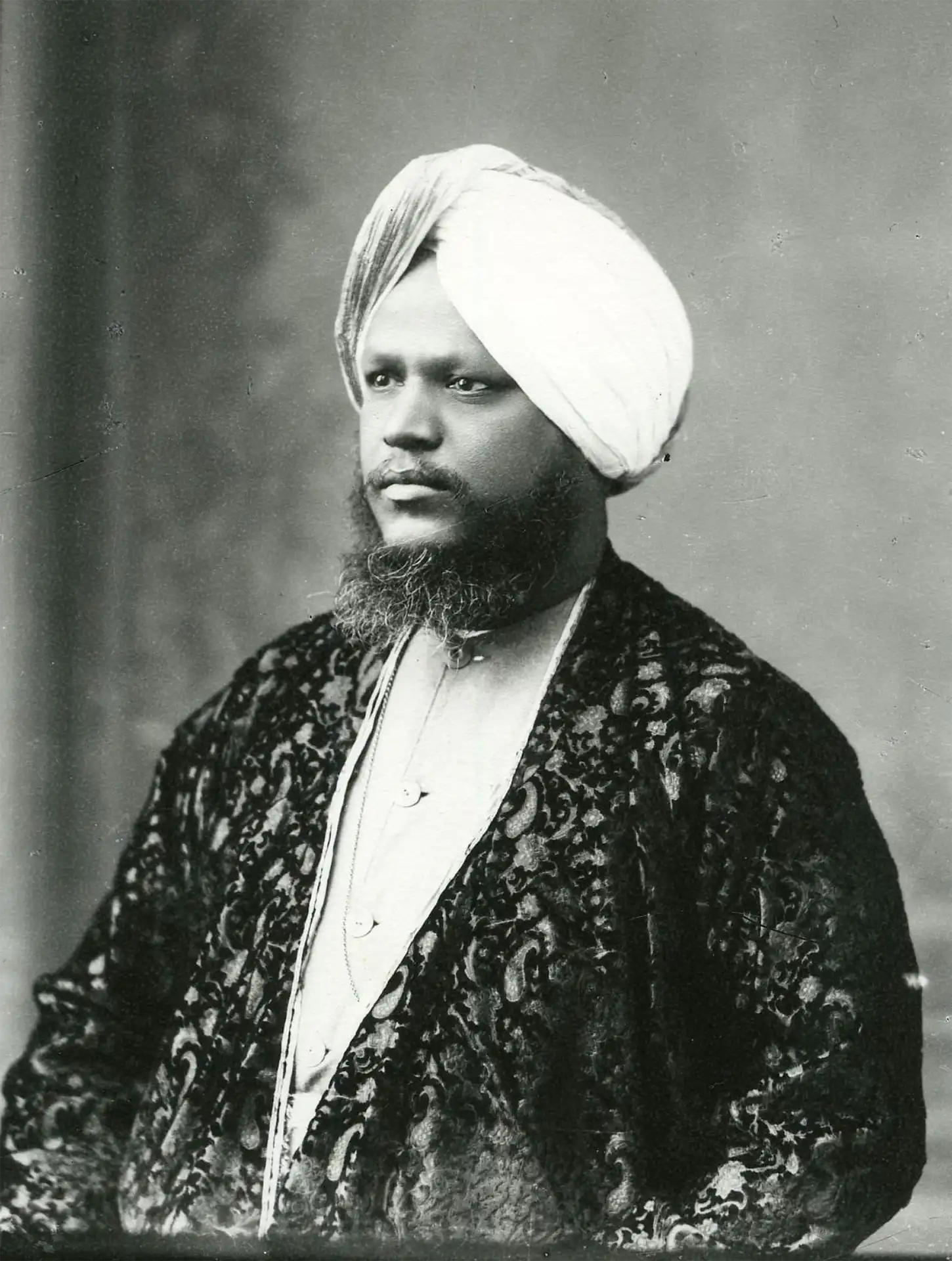
Lala Deen Dayal (also written as 'Din Dyal' and 'Diyal' in his early years) was born at Sardhana near Meerut in 1844. He studied at the reputed Thomason College of Civil Engineering at Roorkee (now IIT, Roorkee) and graduated at the top of his class scoring 258 out of a maximum of 260 marks. In 1866 he became an estimator and draughtsman in the Department of Public Works Secretariat office in Indore. During the course of his job he developed a keen interest in photography and was encouraged by Sir Henry Daly, the Agent to the Governor General for Central India.

In 1874 he photographed the Viceroy Lord Northbrook, and in the following year 1875-76, he photographed the royal visit of the Prince of Wales. Impressed by his talent, Sir Henry took Deen Dayal along with him on his tour of Bundelkhand.

In 1882-83 Deen Dayal again toured Bundelkhand with Sir Lepel Griffin who was then the Agent. His photographs of palaces, forts and temples in Gwalior, Khajuraho, Rewa and Sanchi were splendidly reproduced by the Autotype carbon process in Sir Lepel Griffin's book Famous Monuments of Central India (London 1886). He subsequently took a two year furlough from his official duties in order to concentrate on completing a series of views. Meanwhile he had opened studios in Indore (around 1874), Secunderabad (around 1886-87) and Bombay in 1896. He sought retirement from the PWD in March 1887 and by then had been the Head Draftsman and Estimator for many years.

By far his most wealthy and flamboyant patron was Mahbub Ali Khan the sixth Nizam of Hyderabad, who appointed him the court photographer in 1884 and anointed him with the title of Raja Bahadur Musavir Jung. Similar appointments by a number of Viceroys followed culminating with the royal appointment to Queen Victoria in 1897.
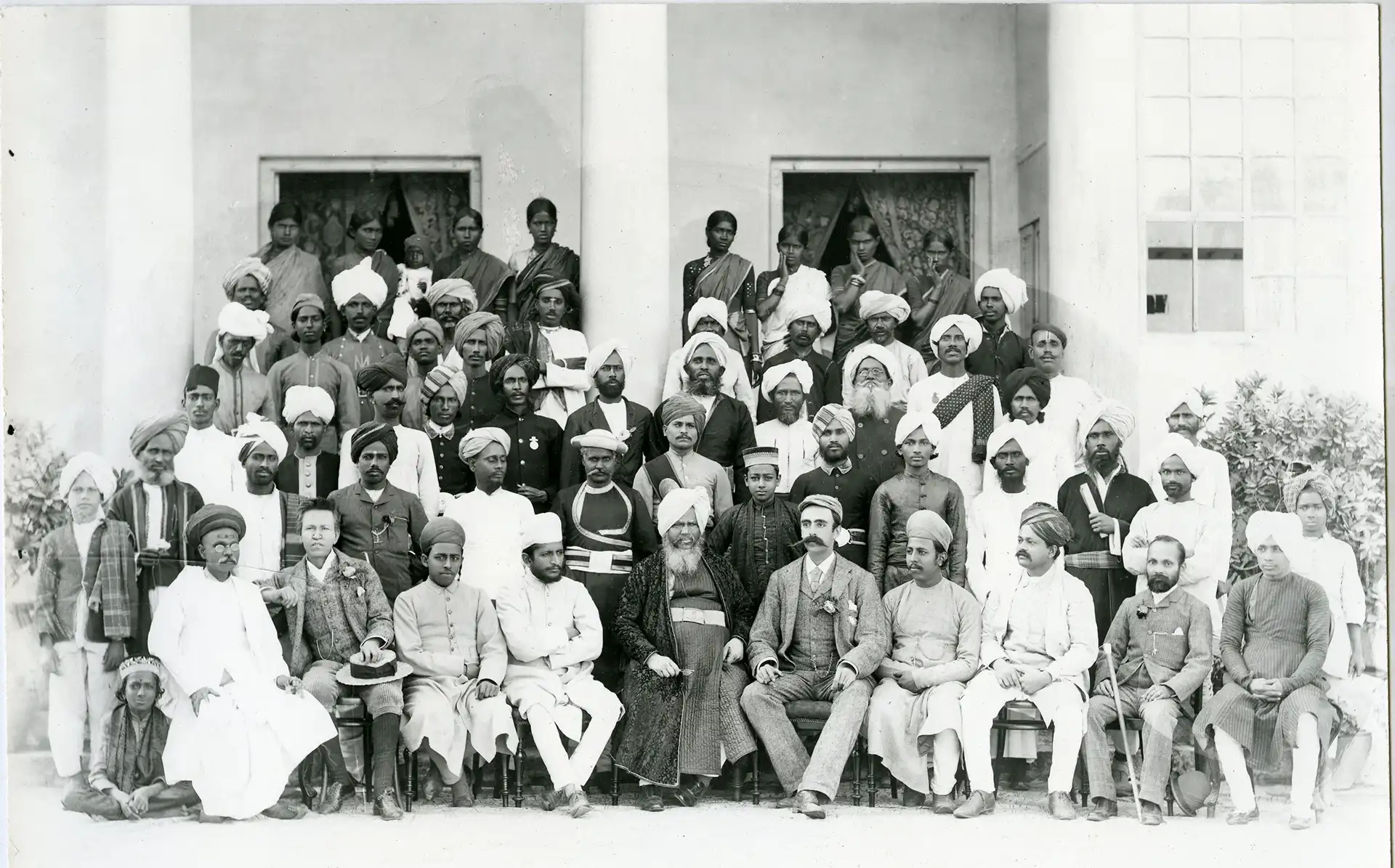
Lala Deen Dayal with his sons and staff

Lala Deen Dayal With His Sons And Staff

Neg. [1888] · 01.11.1893

Over 50 people were employed in the three branches and part of the business was supervised by Deen Dayal's two sons Gyan Chand (1867 – d.1919) and Dharam Chand (1869 – d.1934). In 1892 he opened a Zenana studio, probably the first in India, at the Secunderabad studio. Deen Dayal breathed his last in July 1905, preceded by the untimely demise of his wife a couple of months earlier. The mantle of running the firm was taken up by the able hands of Gyan Chand and he continued to do so till his death.

Awards and Medals

  1. 1883

    Jeypore Exhibition

  2. 1883–84

    Calcutta Exhibition

  3. 1884

    Award Medal

  4. 1886

    London Exhibition

  5. 1888

    Poona Exhibition

  6. 1889

    Calcutta Exhibition

  7. 1891

    London Exhibition

  8. 1894

    World's Columbian Exposition

  9. 1897

    Royal Warrant — Queen Victoria

  10. 2006

    Commemorative Stamp

Prominent Appointments

BY ROYAL APPOINTMENT TO HER IMPERIAL MAJESTY QUEEN VICTORIA

STATE PHOTOGRAPHERS TO H. E. H. THE NIZAM OF HYDERABAD

By Appointments To

H. R. H. THE DUKE OF CONNAUGHT

H.E. EARL OF DUFFERIN AND AVA ( Viceroy & Governor General of India, 1885)

H.E. EARL OF ELGIN AND KINCARDINE (Viceroy & Governor General of India, 1896)

H.E. LORD CURZON OF KEDDLESTON

H.E. LORD MINTO

H.E. LORD HARDINGE OF PENSHURST

ETC. ETC.

Amichand Studio Logo

Inheritance

“A legacy carried forward, fromone lens to another.”

~ Vikas Chand Jain

The photographic legacy of Lala Deen Dayal has endured through six generations, passing from father to son - from Gyan Chand to Ami Chand, from Prabas Chand to Vikas Chand Jain, and now to the present. While Lala Deen Dayal's images form the foundation of this archive, it was Ami Chand who became its devoted custodian, preserving, cataloguing, and continuing the practice of photography through his own work. The Amichand Studio Archives exist as both a repository and a living inheritance - safeguarding the visual history created by Lala Deen Dayal while honouring the generations that have protected, sustained, and carried this legacy forward.

Amichand Deen Dayal Portrait

Amichand Deen Dayal

The Lineage

Ami Chand

1907 — 1984

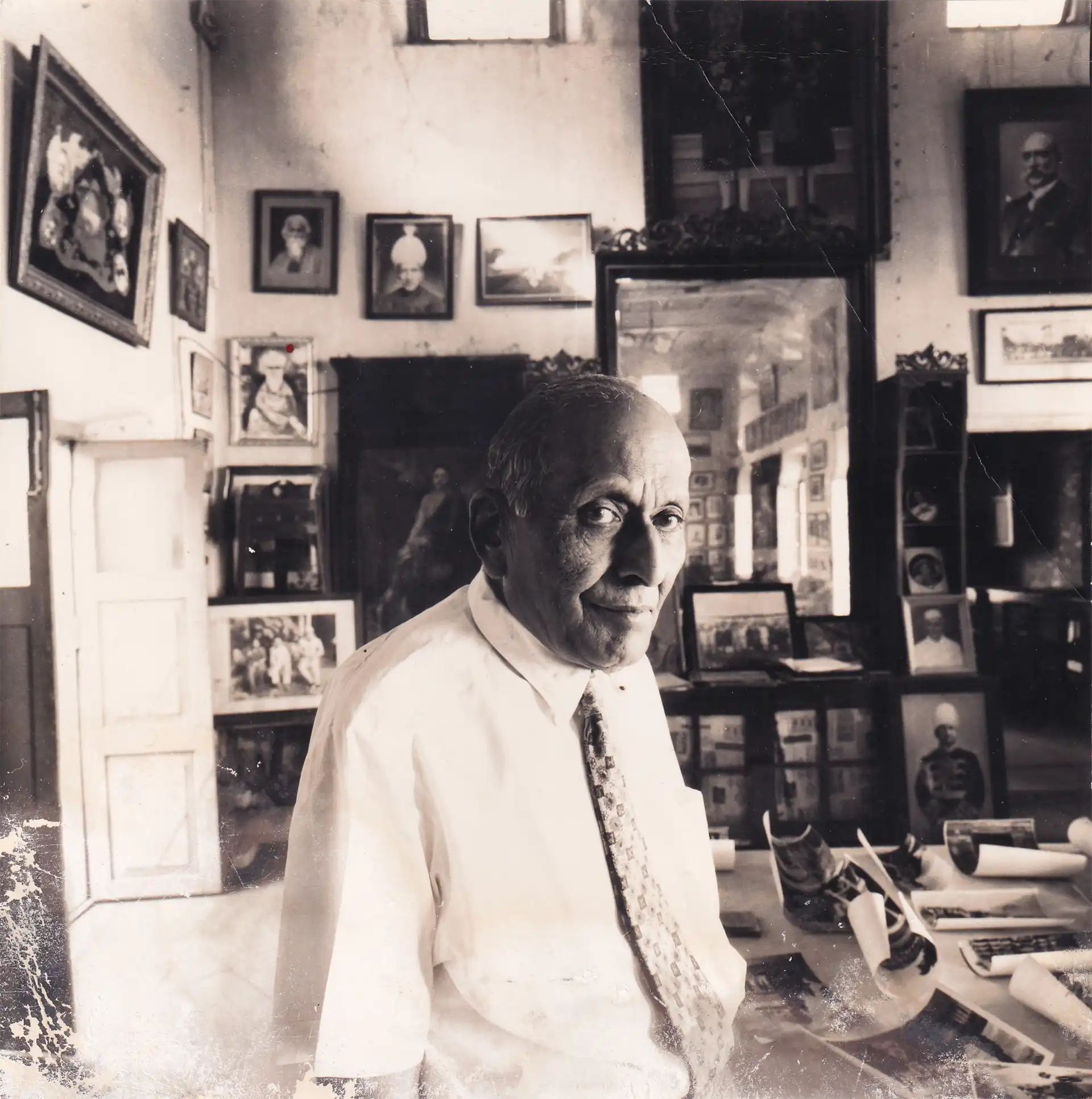
After the untimely demise of Raja Gyan Chand in around 1919, there was a hiatus in the studio's existence. However his youngest son Ami Chand reignited the sparks of the illustrious legacy. The Secunderabad studio was restarted around the late 1920s (studio registers exist from 1932 onwards) and the State patronage of the VII Nizam was regained.

Though fate had willed Ami Chand to forego the direct learning of photographic skills from his grandfather or father, he skilled himself in photography through distance education. He earned a Diploma Certificate in Colouring Photographs & Miniatures in Oil from the National Art School, Chicago in 1937 and a Certificate of Graduation in Professional Photography from New York Institute of Photography, NY in 1941.

His fast growing body of work and photographic accomplishments saw him become a member of the Royal Photographic Society of Britain in 1935 and earn its prestigious Associateship in 1937. He was also a licenciate member of the British Institute of Photographers from 1938 onwards. Amichand's work is a brilliant chronicle of the transfer of power from the era of Mir Osman Ali Khan to the Indian Union. His camera saw the royalty, palaces and hunts eventually yield to the temples of modern India, its industries.

The monarchy gives way to the elected representatives of India; his camera captures key milestone events in the integration of Hyderabad, the visits of Nehru & Sardar Patel, the Nizam becoming the 'Raj Pramukh' , the birth of Andhra Pradesh and finally the passing away of the Nizam in 1967.

Through his own six decade long photographic journey, inspite of all the trials and tribulations and the ravages of time, Amichand Deen Dayal persevered to present Deen Dayal to the future generations. Clark Worswick met the aging master in 1978, carted away an invaluable part of the legacy, but helped the world re-discover Deen Dayal through his captivating book Princely India: Photographs by Lala Deen Dayal published in 1980. Amichand's daughter Hemlata Jain helped organize exhibitions of Dayal's work in Bombay, Pune and London between 1979 and 1982. Recognizing that Dayal's work was a national treasure to be preserved for the future, Ami Chand's sons selflessly handed over the surviving glass plate negatives, studio registers and photographic equipment to the Indira Gandhi National Centre for Arts in 1989.

Prabas Chand Portrait

Prabas Chand

Father, Like Son

Prabas Chand

1937 — 1996

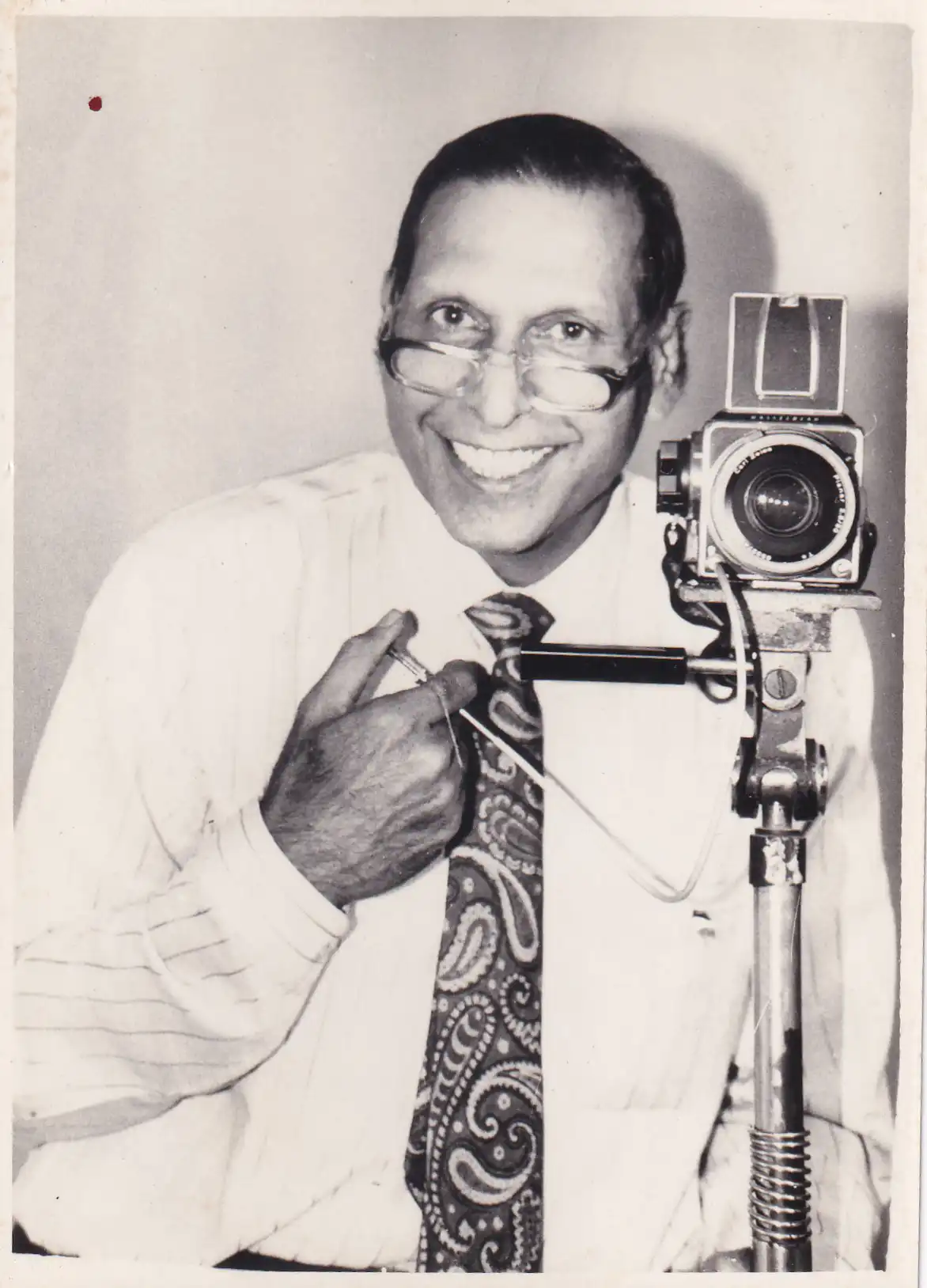
The photographic studio "Foto Crafts" was started in 1959 by Prabas Chand the youngest great grandson of Lala Deen Dayal. It was situated in the prominent commercial locality of Abids, Hyderabad.

Prabas Chand was an energetic, polite and charming gentleman. A talented photographer in his own right, he was widely respected in the Hyderabad circles and much sought after by them as the photographer of choice for capturing their most important moments.

Prabas was adept at the art of his ancestors and an expert in using a wide range of photographic equipment ranging from the 10x12 field cameras, the large format Rolleiflex & Hasselblad and the latter day Pentax & Nikon SLRs.

His camera captured important events in the evolving Hyderabad landscape including the funeral procession of the VII Nizam, the coronation of the VIII Nizam, and the cultural, industrial and corporate life of Hyderabad's institutions. With the advent of advertising photography he excelled in Kodak Ektachrome medium (common referred to as slides or transparencies). His portraits had an amazing quality: his eye and lens coaxed out the hidden qualities of the human visage; even the most camera reticent people often remarked it was the best side of their personal.